


Hey FAANG FIRE!
As we head into the final months of 2026, I wanted to revisit a financial account not enough FAANG workers are contributing to.
What I consider the “Tax Advantaged Cherry on Top” of my cashflow prioritization waterfall.
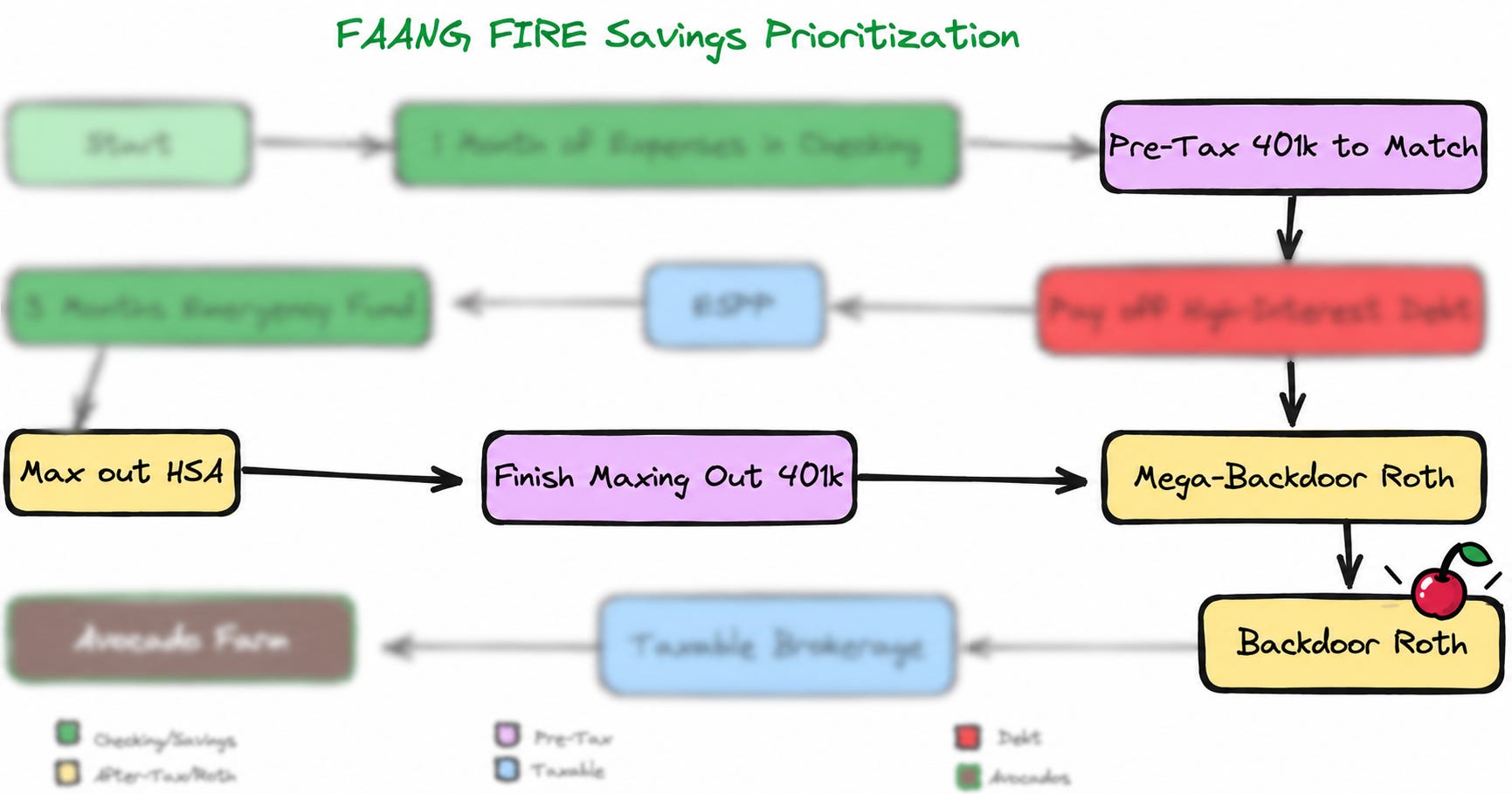
What that means is that among all the tax advantaged accounts you can contribute to, I view the backdoor roth as the “nice to have” bonus.
That is to say you should 100% try and contribute to it, but if you miss it while doing everything else, it isn’t the end of the world.
But seriously, if you have the cash flow, just do it. Like right now. We are just going to do this together, unless you currently have a traditional IRA or rollover IRA. Then you are going to follow this prior walkthrough where the first step involves rolling your current traditional IRA or Rollover IRA funds into your current workplace 401k to avoid the pro-rata rule.
Disclaimer: I’m not a CPA, accountant, financial advisor, or tax professional. This walkthrough is for educational purposes and shows how I personally complete a Backdoor Roth IRA. There are additional considerations if you have existing pre-tax IRA balances or other complications. If you’re unsure whether this applies to your situation, consult a qualified tax or financial professional.
Quick Recap on the Backdoor Roth:
A Roth IRA is a tax-advantaged account where after-tax funds can grow tax free and be withdrawn tax free in retirement.
In 2026 the contribution limit is $7,500.
If you earn more than $168k single or $252k married you can’t contribute directly to a Roth IRA.
A “Backdoor” Roth IRA involves making a nondeductible contribution to a traditional ira and then converting those funds into a Roth IRA.
This allows high earners to effectively fund $7,500 per year into a Roth IRA despite any income limits on direct contributions by going through the backdoor of a traditional ira.
Like all IRAs, they require earned income. However, if you are MFJ and have a non-working spouse, they can still make contributions (spousal ira contributions).
The important caveat is that you want to make sure you have $0 in all Traditional IRA, rollover IRA, SEP IRA, and SIMPLE IRA accounts by the end of the year or else you will be subject to the “pro rata rule”.
You can do and should do this in addition to the “Mega Backdoor Roth”. Their made up names sound similar, but they don’t interact with each other in any way.
Step 1: Open a Traditional IRA Account
I personally will be using Fidelity for this walkthrough, but I would use whichever institution you already have other retirement accounts with. Fidelity, Vanguard, and Schwab are all perfectly fine options (none of the sign up links are sponsored/affiliates.)

If you already have a Traditional IRA from prior years backdoor roth fun, you can just use that one. If there is already money in the account that is from a prior traditional IRA contribution… be aware of the “pro rata rule” which probably makes this not worth doing until you resolve it (ok, i’ll stop bringing it up).
If you are following along on Fidelity I needed to click “Open a traditional IRA” one more time to avoid a Fidelity managed upsell.
Want to do this with me 1:1? Paid subscribers get 20 minutes with me every six months. Extra Guac bumps that to 30 minutes and includes a bundle of my favorite FIRE tools (check out the partners and eligibility).
Step 2: Fund Your Traditional IRA Account


The $7,500 I am using to fund this account is in another Fidelity account (their cash management account). After you select where the funds are coming from, you select “one-time” and then enter the full annual contribution “$7,500”.
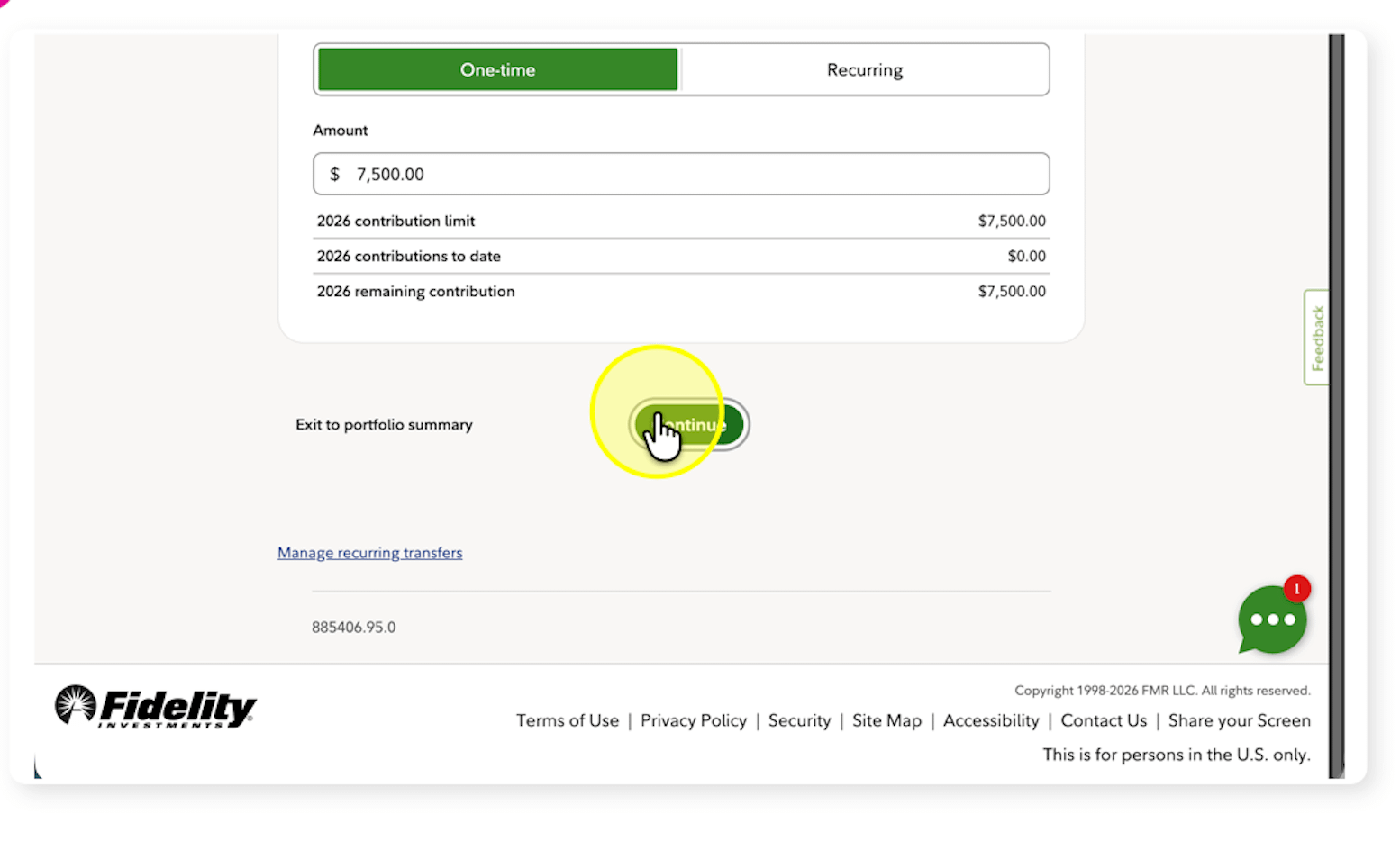
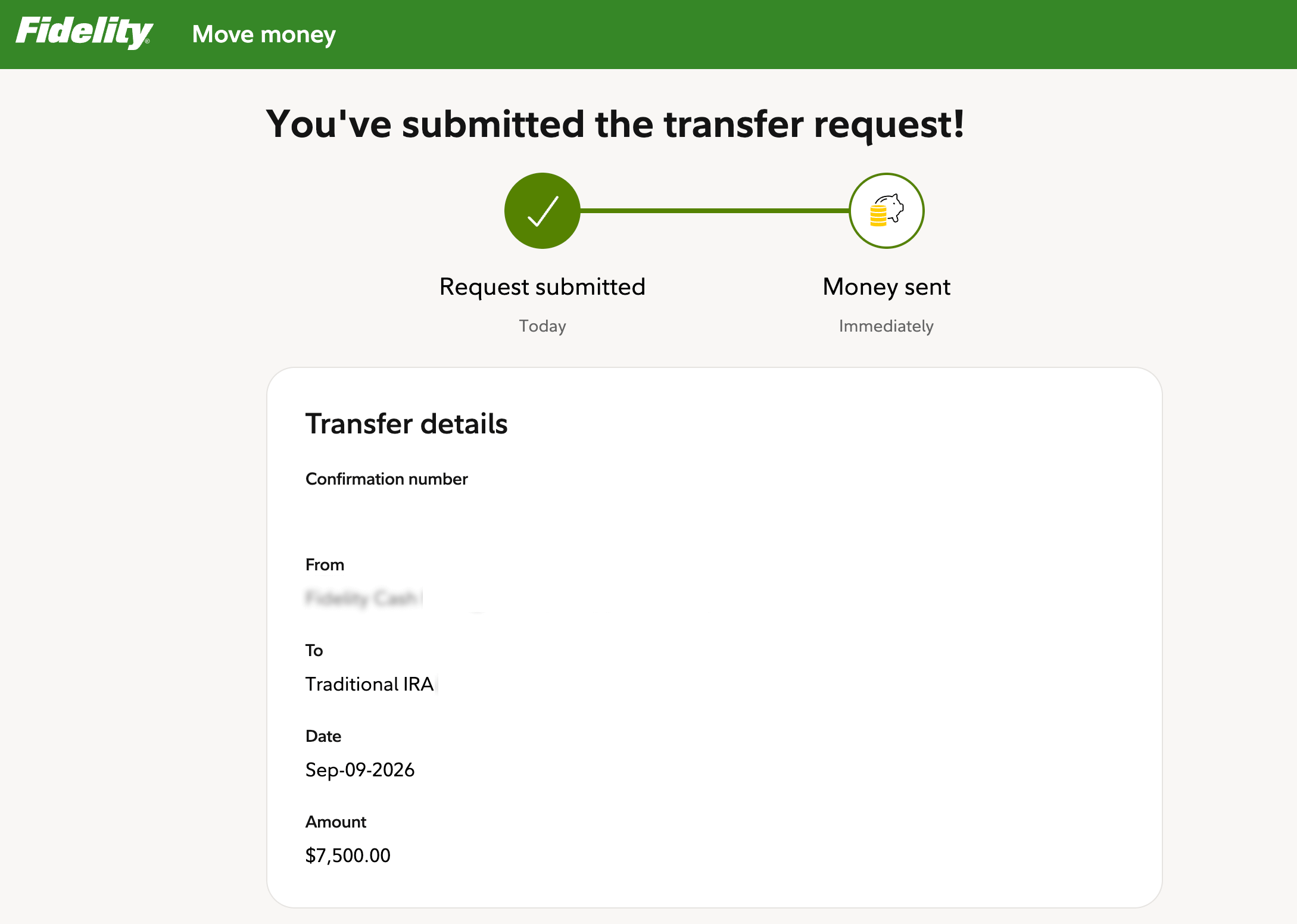
This step ends with a fully funded Traditional IRA. It may take a few days for the funds to settle if your deposit was from an external account.
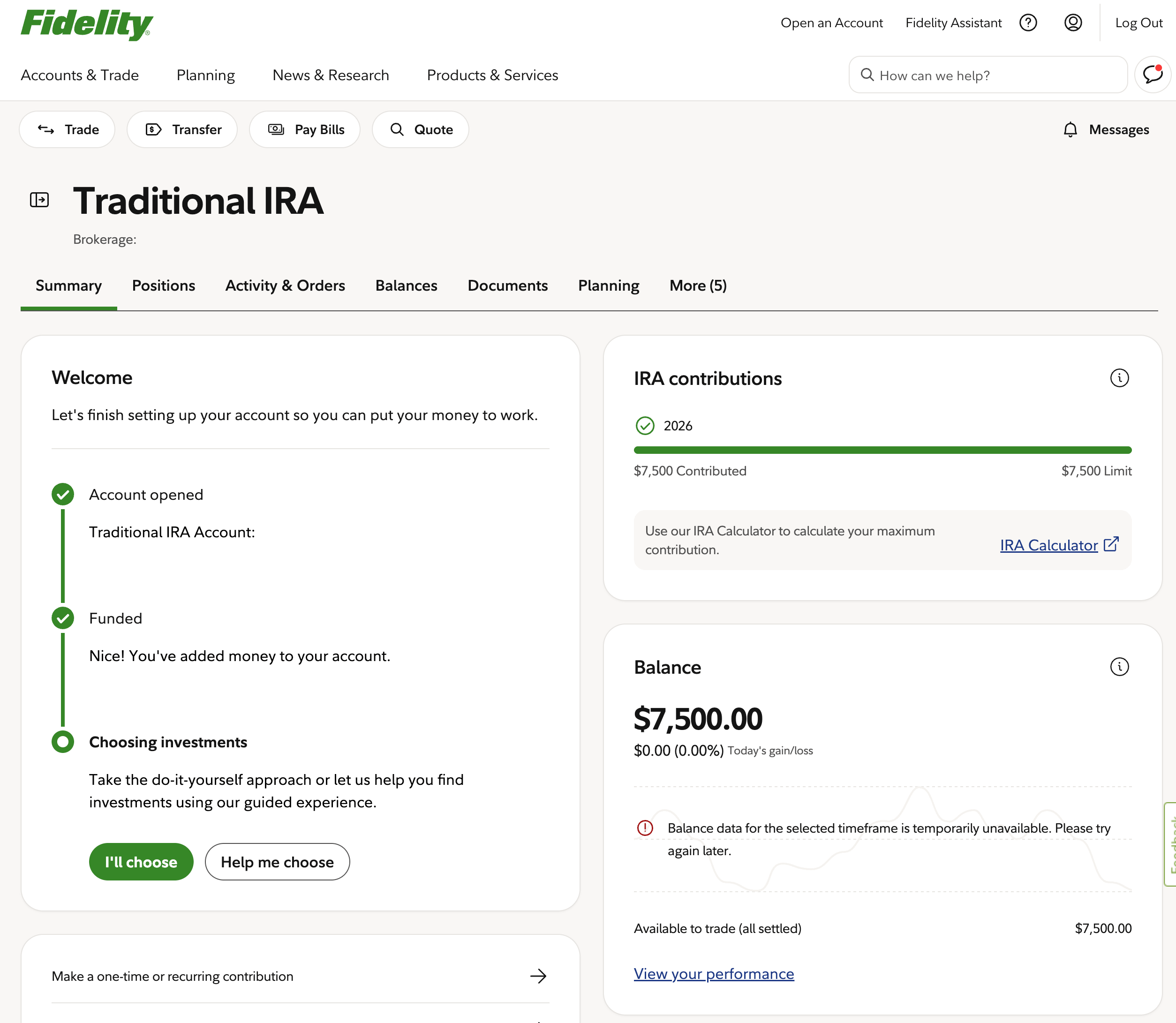
Step 3: Open a Roth IRA (If You Don’t Already Have One)
If you already have a Roth IRA at your institution (fidelity in my case) you can skip this step. Otherwise, open a Roth IRA just like you opened a Traditional IRA. Just don’t fund it.
Fidelity Roth IRA Account Link: https://www.fidelity.com/retirement/roth-ira

Step 4: Convert The Traditional IRA Deposit Into Roth IRA
To make things easier, I always just go through the dedicated Fidelity Roth Conversion flow.
Fidelity Roth Conversion Landing Page: https://www.fidelity.com/retirement/roth-conversion

Note: It often takes a business day or more before the funds in your Traditional IRA are settled and available to do the Roth Conversion step. Create a reminder for yourself to finish this step tomorrow!
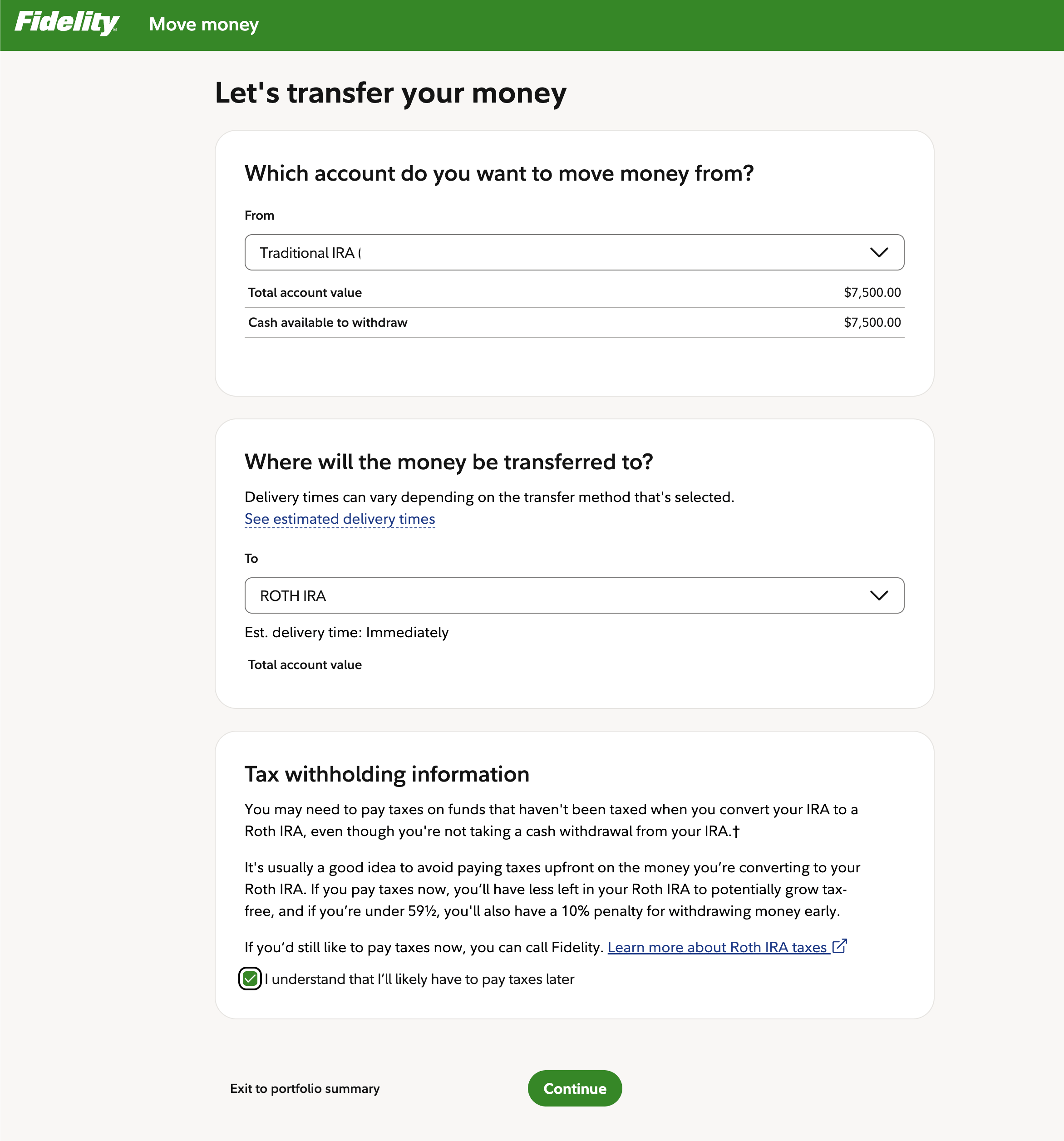
Here you can see the conversion flow where I selected that I am transferring funds from my newly opened Traditional IRA into my Roth IRA. I am also acknowledging the tax withholding disclaimer which would be applicable if I was doing a normal roth conversion of pre-tax funds, but because I am doing a Backdoor Roth using already after-tax funds (and am not subject to pro-rata), the need to withhold additional taxes doesn’t apply to me.”
Confirmation screen:
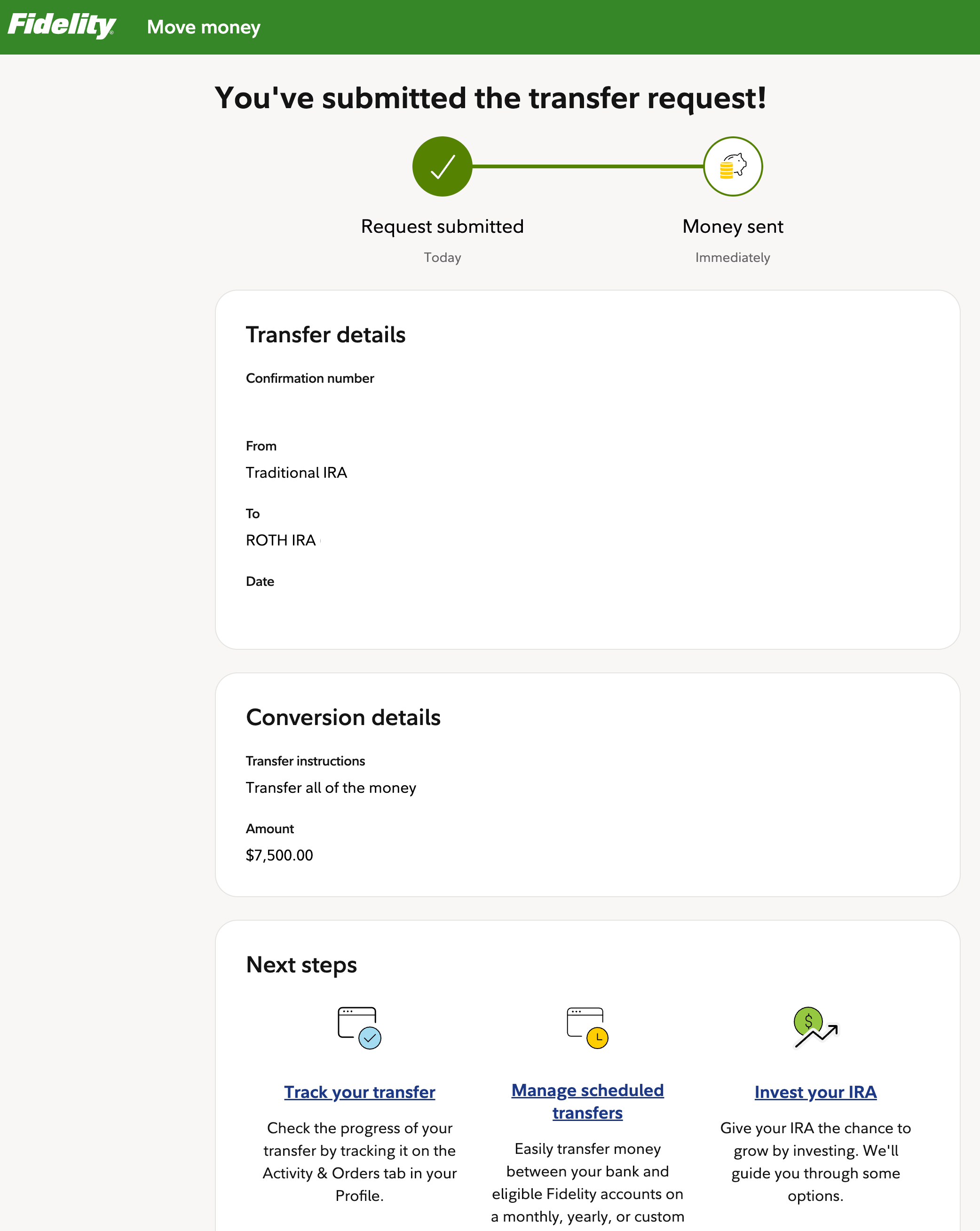
You are nearly at the finish line! You just completed the backdoor roth conversion step! The next step is just as important, please don’t stop here!
Step 5: Invest (Don’t Forget This Step!)
Depending on when you completed the conversion, the market may be closed, and you have to wait until tomorrow to make your investment. Once again, set yourself a reminder for tomorrow so you don’t forget!
I then spot checked my asset allocation to see whether I should buy US equities or International equities (see my boring approach). In this case I was light on US Equities, so I just bought more of the Fidelity Total Market mutual fund I had previously bought in the account.
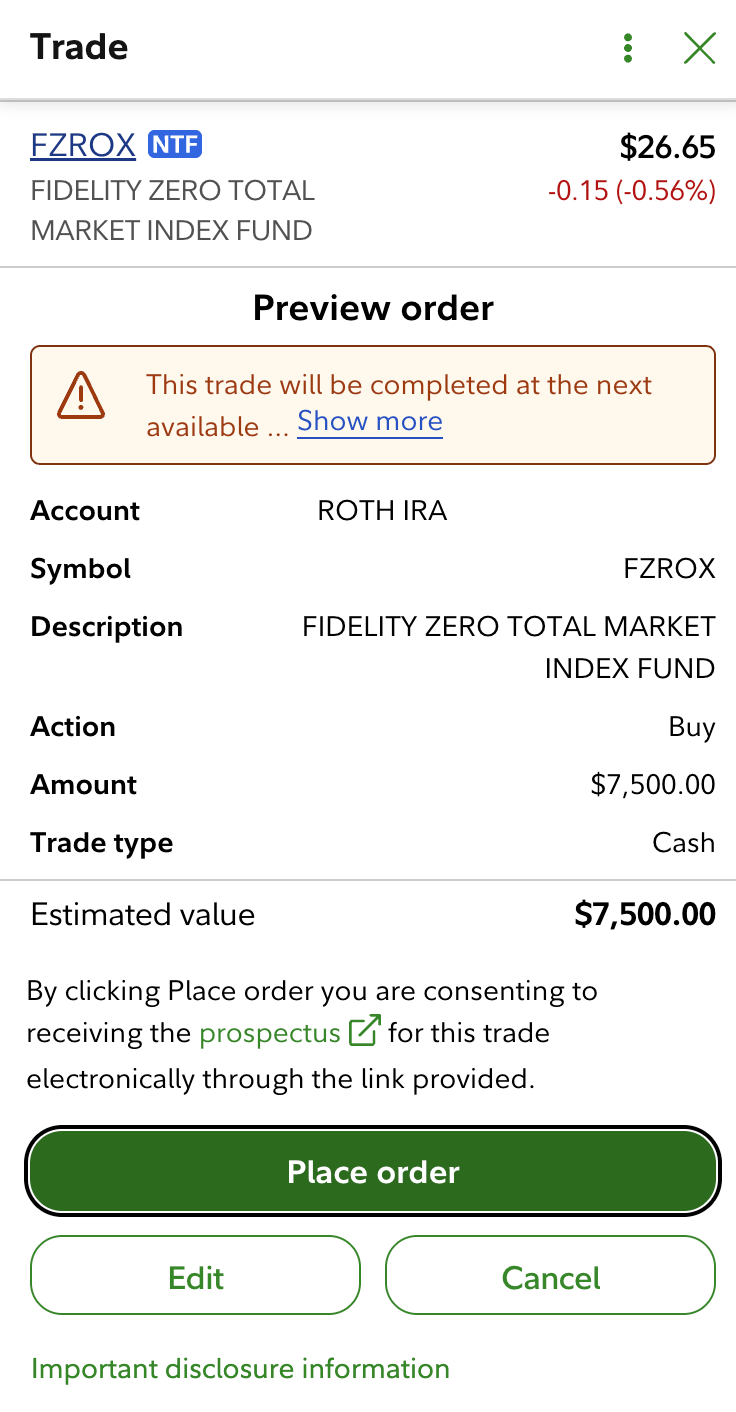
Note: In my taxable account I make it a point to stick with ETFs that can easily move to other brokerages. In my tax advantaged accounts, like my Roth, I often utilize Fidelity’s zero fee funds. I do not recommend buying these in your taxable due to lack of portability. Deeper topic for another time.
I could have just as easily bought VTI on the open market, there wasn’t any deep optimization. Just easier to buy more of what i already had that also fit my investing goals.
BOOM! You have just finished the backdoor roth ira. You are a badass.
If you are married, be sure to walk your partner through the process too so they can join you in badassery. Even if your partner isn’t working full time, if you are married filing jointly, and you have the household income, they can go through the same flow. The flow is the same one, but it is referred to as a Spousal IRA contribution if you wanted to read more.

Step 6: Don’t Fuck Up Your Taxes
The entire benefit of a backdoor roth is that you are moving funds that were already taxed and putting them into a Roth IRA where they will never be taxed in the future. The process is very similar to a normal roth conversion which involves intentionally paying taxes on converted Pre-Tax funds from a Traditional IRA and putting it into a Roth IRA.
A Backdoor Roth that is properly entered should result in near $0 in additional taxes. If your taxes increased after entering it, there is a submission error. See How to Properly Enter a Backdoor Roth into TurboTax.
Quick way to check past returns: Look at your 1040, field 4b. If it is $0 you are good. If it isn’t you may have made this mistake.

You will also want to make sure your tax software has you filing a Form 8606 which tracks your basis on your Roth Conversions.
Additional Backdoor Roth Q&A
Question: I finished the backdoor roth, but now my Traditional IRA has a random $0.75 in it?
Answer: This is often due to your deposit earning interest prior to finishing the conversion. I would just convert the remaining balance. This will result in needing to pay taxes, but it is on an entire $0.75. Not a big deal.
Question: I rolled an old 401k into an IRA years ago after leaving my first job out of college. Any strategies on how to handle given the pro-rata rule and what steps to take?
Answer: Easy! If you are currently working, just roll that old rollover IRA into your current employer’s 401k. Boom, you end the year with $0 in your Rollover IRA and don't have to worry about the pro rata rule.
Any other questions? Drop them in the comments.
Hi I already have a ROTH IRA. It has some money in it already <$100. Should I start a new Roth IRA this year from scratch or use the one I already have?